Safe cooking temperatures: what the authorities actually say
Over the embers, colour lies; the probe doesn't. The US and Canadian internal temperatures side by side, and where they disagree.
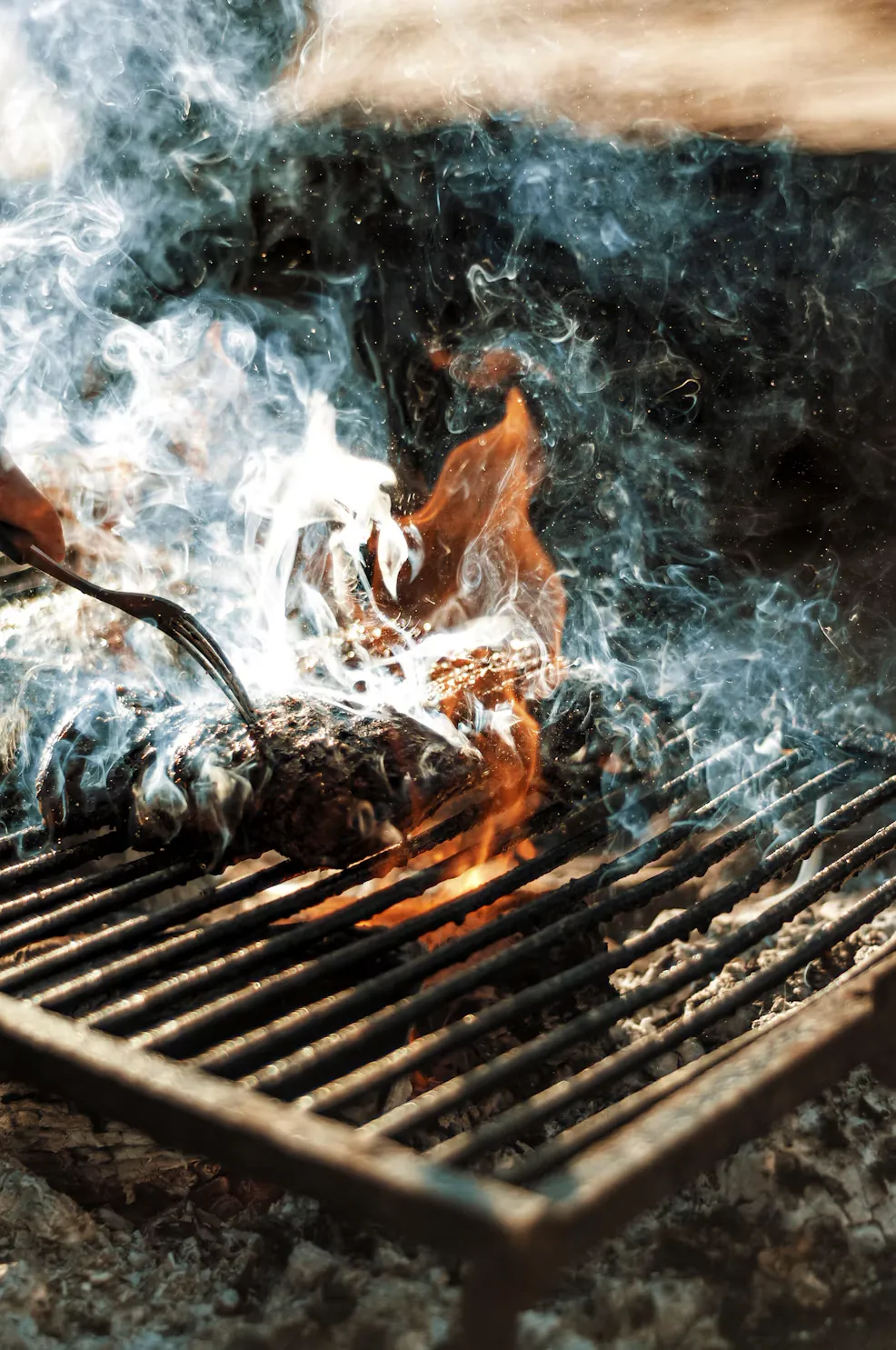
Over the embers, colour is a poor witness. A dark crust can hide a raw centre; pink juice can run from a bird that is fully cooked. The only reliable answer is a probe. The US government says it plainly: always use a food thermometer to check that meat has reached its safe minimum internal temperature1.
This page gathers the official numbers WOODSMOKY applies in every recipe. It does not replace the advice of the food safety authority where you live.
Two official charts, side by side
We rely on two public references: the US government chart1 and Health Canada's2. For most foods they agree. For a few, they don't.
| Food | United States | Canada |
|---|---|---|
| Beef, veal, lamb: steaks, roasts, chops | 63 °C (145 °F), then a 3-minute rest1 | 63 °C (145 °F) medium-rare, 71 °C (160 °F) medium, 77 °C (171 °F) well done2 |
| Ground meat and sausages | 71 °C (160 °F)1 | 71 °C (160 °F)2 |
| Pork: chops, roasts | 63 °C (145 °F), then a 3-minute rest1 | 71 °C (160 °F)2 |
| Poultry: pieces and ground | 74 °C (165 °F)1 | 74 °C (165 °F)2 |
| Whole poultry | 74 °C (165 °F)1 | 82 °C (180 °F)2 |
| Fish | 63 °C (145 °F), or until the flesh is opaque and flakes with a fork1 | 70 °C (158 °F)2 |
| Reheated leftovers | 74 °C (165 °F)1 | 74 °C (165 °F)2 |
The rest is not optional
For whole cuts of beef, veal, lamb and pork, the US chart pairs 63 °C (145 °F) with a 3-minute rest off the heat. According to the chart, that rest lets the innermost parts and the juices become fully and safely cooked1. Pulling a steak at 63 °C (145 °F) and slicing it straight away is not following the guidance.
Why the numbers differ
The two agencies made different choices for pork, whole poultry and fish. Their charts don't explain the reasons, and we won't guess at them. So we show both.
The WOODSMOKY rule is simple: follow the food safety authority of your country. When in doubt, the higher number is the safer one.
One case worth knowing: mechanically tenderized beef
Some beef and veal is tenderized with blades or needles before it is sold. For these cuts, Health Canada recommends 63 °C (145 °F) at the centre and turning the meat at least twice while it cooks2.
What WOODSMOKY applies in its recipes
- Every recipe gives the official internal temperature and its source.
- When a recipe suggests a rarer result for taste, we present it as a preference, next to the official value. Never as a safe value.
- This page is reviewed at least once a year, and whenever an authority publishes an update.
Sources
Every number and fact on this page points to one of these sources.
- Official sourceSafe Minimum Internal Temperature ChartFoodSafety.gov (US government), last reviewed November 21, 2024 · accessed November 11, 2026
- Official sourceSafe cooking temperaturesHealth Canada · accessed November 11, 2026
Keep exploring
The reverse sear: embers last
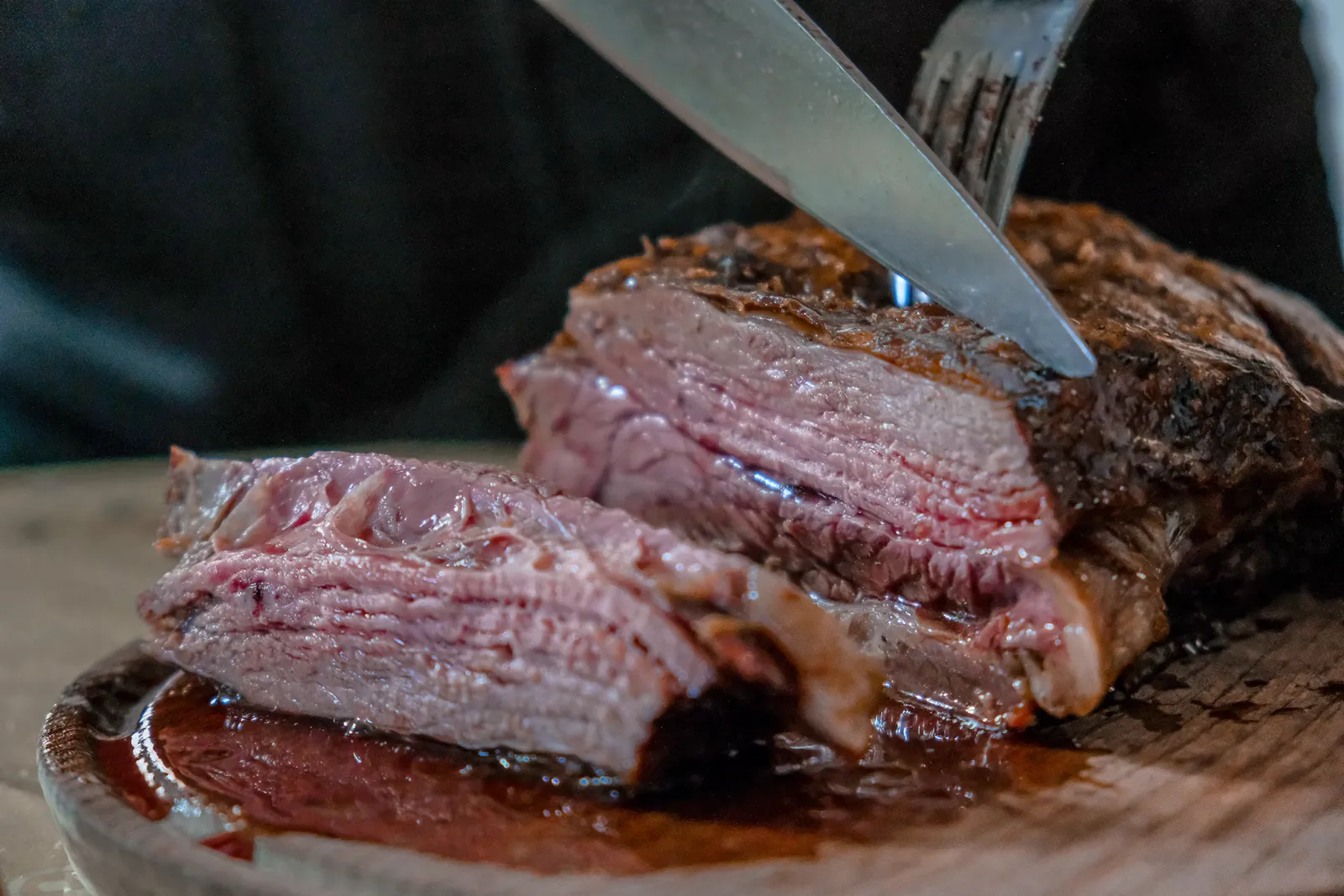
A thick rib steak, coaxed first away from the embers, then thrown over a roaring fire for a dark, crackling crust. The numbers that matter, and where they come from.